Benefits
What Is Professional Teeth Cleaning?
Professional teeth cleaning, also called scaling and polishing, removes the plaque and hardened tartar that brushing and flossing at home cannot. Tartar builds up along and just under the gum line, where it irritates the gums and lets bacteria grow. Left alone, this leads to bleeding gums, bad breath, gum disease and, eventually, loose teeth.
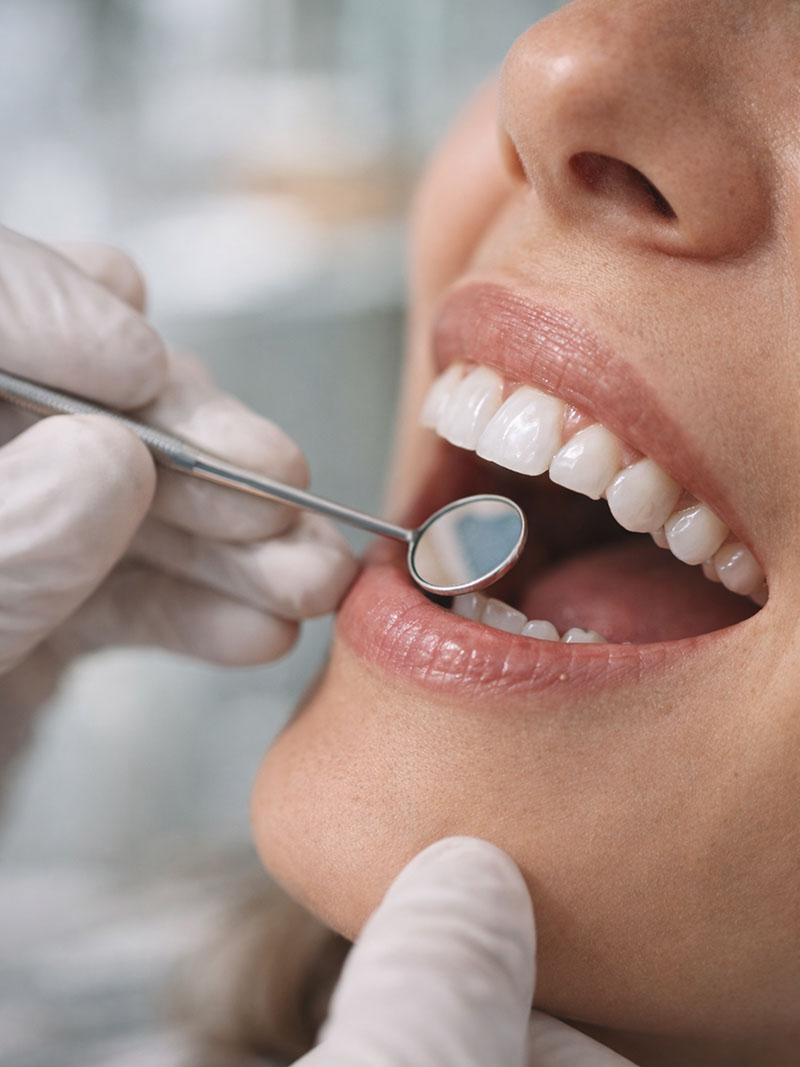
During a cleaning, tartar is removed with fine instruments, the teeth are polished to remove surface stains, and your gums are checked for early signs of disease. It is one of the simplest ways to prevent bigger and more expensive dental problems.
Benefits of teeth cleaning
Removes tartar that brushing cannot shift
Reduces bleeding gums and bad breath
Lowers the risk of gum disease and tooth decay
Removes surface stains from tea, coffee and smoking
Finds problems early, when they are simpler to treat
Leaves your teeth feeling smooth and clean
Why tartar needs a professional
Plaque is a soft, sticky film of bacteria that forms on teeth every day. If brushing does not remove it, it hardens within days into tartar, also called calculus, which sticks firmly to the teeth and cannot be brushed off. Tartar has a rough surface that collects even more plaque, so the problem builds on itself. Only scaling can remove it safely.
Gum health and your general health
Research has linked gum disease with conditions such as diabetes and heart disease. People with diabetes are also more prone to gum problems, and keeping gum inflammation under control is part of good diabetes care. Pregnancy can also make gums more prone to swelling and bleeding, so a dental check and cleaning during pregnancy is often recommended. Healthy gums are part of looking after your overall health.
Routine cleaning and deep cleaning
A routine cleaning treats tartar above and just below the gum line. If gum disease has formed deeper pockets around the teeth, a deep cleaning (scaling and root planing) may be advised. It cleans the root surfaces below the gums, often over more than one visit and with local anaesthesia.
Ideal Candidate
Who Needs Teeth Cleaning?
Almost everyone benefits from a professional cleaning. Most people need one every six months, and some need it more often.
Signs you may need it
Gums that bleed when you brush or floss
Bad breath that does not go away
Yellow or brown deposits along the gum line
Red, swollen or tender gums
Stains from tea, coffee or smoking
It has been more than six months since your last cleaning
You may need cleanings more often if you smoke, have diabetes, wear braces or aligners, or have had gum disease before. If you are having treatment with braces or clear aligners, plaque collects more easily around brackets and attachments, and regular cleanings help prevent white marks and swollen gums.
When it is not suitable on its own
A routine cleaning may not be enough when:
gum disease has formed deep pockets around the teeth, which need a deep cleaning
teeth have become loose or the gums have receded a lot
there are cavities or broken fillings that also need treatment
In these cases we explain the treatment you need and plan it with you. If you have a heart condition, take blood thinners or are pregnant, tell us before your cleaning.
Process Overview
The Teeth Cleaning Procedure at Dental Life
A routine cleaning is done in a single visit, usually 30 to 45 minutes. A deep cleaning may need more than one visit. Your visit also includes a check for cavities and other problems, so a cleaning doubles as a dental check-up.
Step 1: Consultation and diagnosis
We check your teeth and gums, look for tartar, bleeding and gum pockets, and check for cavities. X-rays are taken only if they are needed. If there is heavy tartar or it has been a long time since your last cleaning, we may suggest doing it over two visits. We tell you what we found and what the cleaning involves before we start.
Step 2: The treatment
Plaque and tartar are removed from around each tooth with an ultrasonic scaler, which uses gentle vibrations and water, and with fine hand instruments. Your teeth are then polished to remove surface stains and leave them smooth.
If your teeth are sensitive, tell us before we start. We can adjust the scaler and work more gently on sensitive areas.
Step 3: Recovery and aftercare
Your gums may feel slightly tender or bleed a little for a day, and your teeth may feel sensitive to cold. This usually settles quickly.
Aftercare tips:
Brush twice a day with a soft brush and fluoride toothpaste
Clean between your teeth daily with floss or interdental brushes
Use a sensitivity toothpaste if your teeth feel sensitive
Book your next cleaning in six months, or sooner if we advise it
At home, brush for two minutes, angle the brush towards the gum line, and replace your toothbrush every three months or sooner if the bristles splay.
Why Choose
Why Choose Dental Life, Sector 53
At Dental Life, every cleaning comes with a check of your teeth and gums, so problems are found early. We explain what we see in plain language and tell you what, if anything, needs attention.
A gum health check at every cleaning
Clear advice on brushing and cleaning between your teeth
Whitening, fillings and specialist treatment in the same clinic
Evening appointments, so you can come after work
Open Monday to Sunday, 10 AM to 9 PM
Many patients book a cleaning before teeth whitening for a more even result.
Dental Life is on the 1st floor of Central Plaza Mall, Golf Course Road, Sector 53, Gurugram. Patients travel to us from DLF Phase 5, Sushant Lok, South City, Sector 54, Sector 56 and Wazirabad.
For your first visit, bring any recent dental X-rays, a list of the medicines you take and details of any earlier dental treatment.
Book a consultation or call us on +91 98218 39933.
Common Questions
Frequently Asked Questions
How often should I get a cleaning?
What happens during a hygiene visit?
Does cleaning hurt?
Do I need X-rays every time?
Can a cleaning whiten my teeth?
Why do my gums bleed when I brush?
Is teeth cleaning safe for the enamel?
Who does teeth cleaning at Dental Life?