Benefits
What Are Dental Implants?
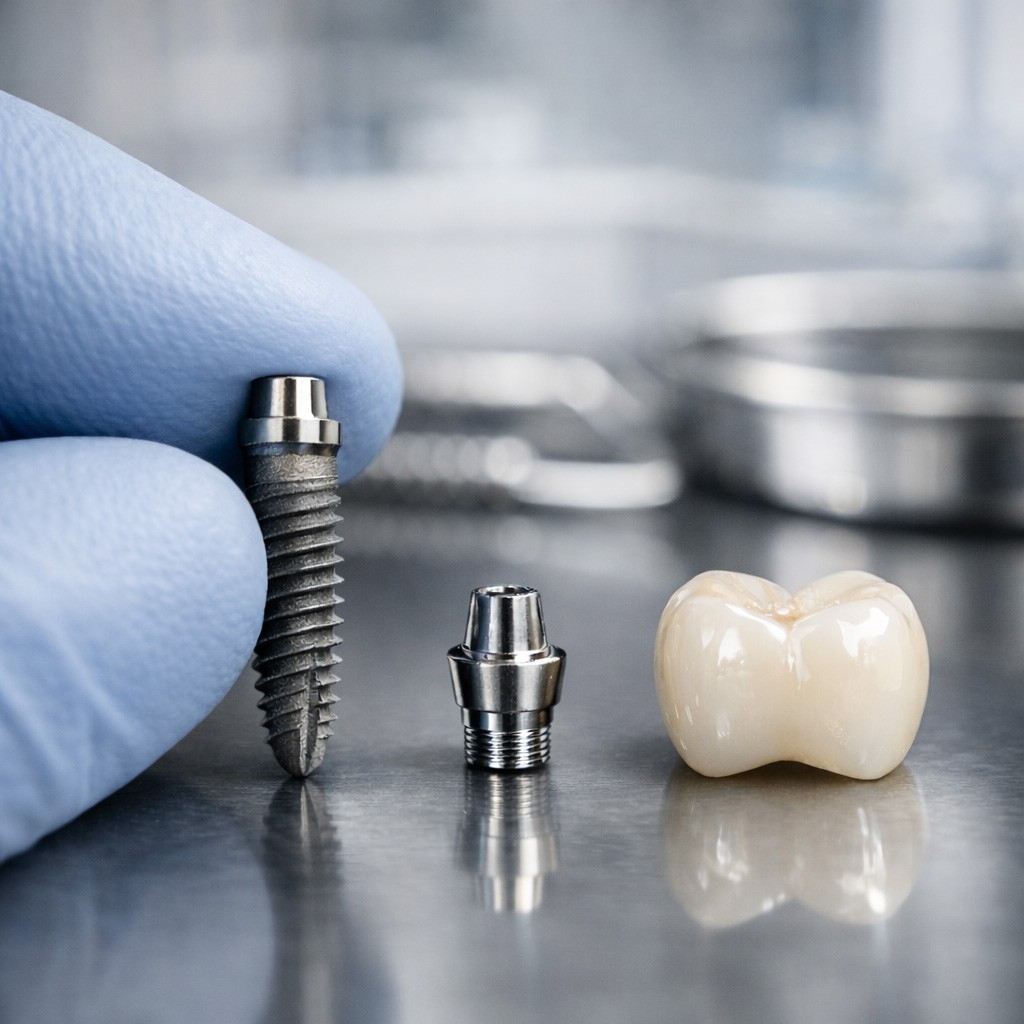
A dental implant is a small titanium post placed in the jawbone where a tooth is missing. Over the following months the bone grows around it and holds it firmly, much like a natural tooth root. A crown made to match your other teeth is then fixed on top. Implants can replace a single tooth, several teeth, or support a bridge when more teeth are missing.
Unlike a removable denture, an implant stays in place when you eat and speak. Unlike a conventional bridge, it does not need the healthy teeth on either side to be cut down to support it.
Benefits of dental implants
Replaces both the root and the visible part of the missing tooth
Feels and works like a natural tooth when you eat and speak
Does not rely on the neighbouring teeth for support
Helps preserve the jawbone, which slowly shrinks where a tooth is missing
Fixed in place, with no adhesives and nothing to take out at night
Can last for many years with good oral hygiene and regular check-ups
Implant, bridge or denture?
There are three main ways to replace a missing tooth. A bridge is quicker but relies on the teeth next to the gap. A removable denture costs less at the start, but it can move while you eat and has to be taken out to clean. An implant takes longer to complete, but it stands on its own and protects the bone underneath. Your surgeon will explain which option suits your mouth, your health and your budget.
Ideal Candidate
Who Needs Dental Implants?
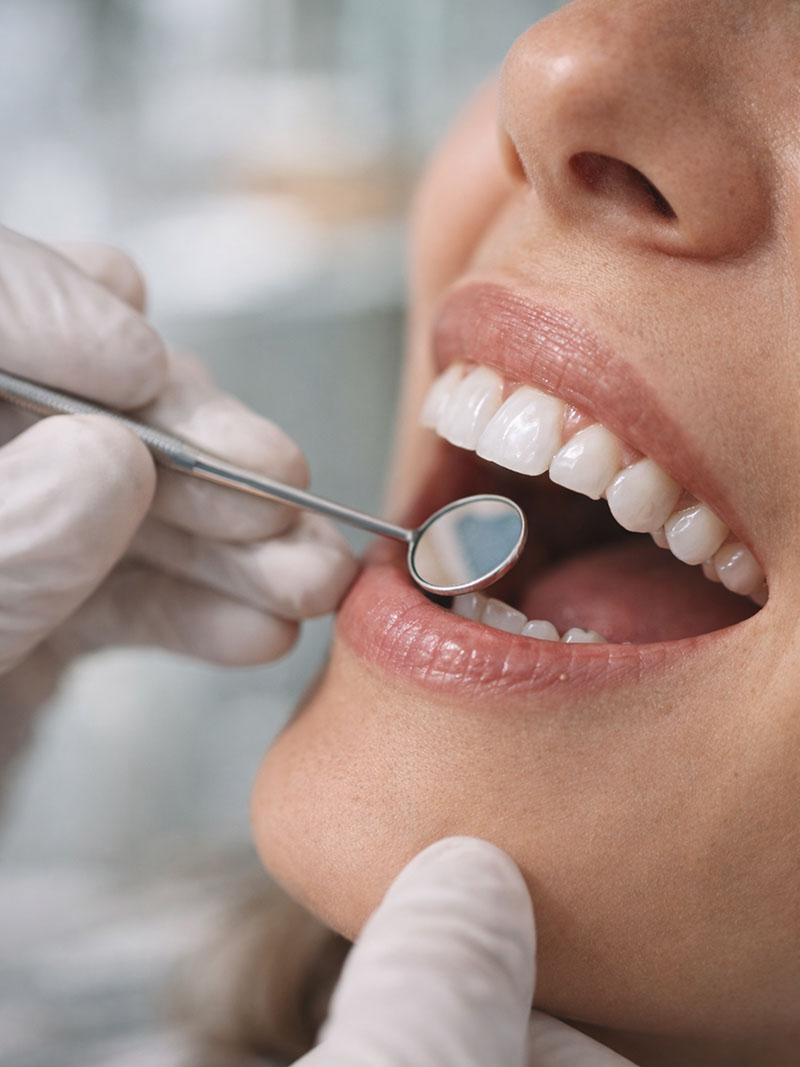
Dental implants suit most adults who have lost one or more teeth to decay, gum disease or an injury, or who have a tooth that cannot be saved. What matters most is your general health, the health of your gums and how much bone there is where the implant will go.
Signs you may need it
One or more missing teeth, including back teeth that are out of sight
A tooth that is broken below the gum line or too damaged to repair
A loose or uncomfortable bridge or denture
Difficulty chewing on one side because of a gap
Neighbouring teeth starting to tilt or drift into a gap
You want a fixed replacement rather than one you take out
When it is not suitable
An implant may need to wait, or may not be the right option, when:
gum disease is active and has not yet been treated
there is not enough bone and a bone graft is not advisable
diabetes or another medical condition is not well controlled
the patient is still growing, as with children and young teenagers
the patient smokes heavily, which raises the risk of the implant failing
Many of these can be managed first. Gum disease can be treated, and missing bone can often be rebuilt with a graft. Your surgeon will go through your medical history and X-rays before advising you.
Process Overview
The Dental Implant Procedure at Dental Life
A single implant is usually completed in two main stages a few months apart: placing the implant, then fitting the crown once the bone has healed around it. The total time depends on your bone, the tooth being replaced and whether any extra treatment is needed first.
Step 1: Consultation and diagnosis
We examine your mouth and gums and take X-rays to check the bone. For many implant cases a 3D scan (CBCT) is also advised, to measure the height and width of the bone and plan the exact position of the implant. We then explain the plan, the timeline and the cost before anything is booked.
Step 2: The treatment
The implant is placed under local anaesthesia, so the area is numb throughout. Through a small opening in the gum, the surgeon prepares a space in the bone and places the titanium implant. The gum is then closed over or around it, sometimes with a few stitches.
The implant then needs time to bond with the bone, usually a few months. If the gap is visible when you smile, a temporary replacement can be discussed for this period.
Step 3: Recovery and aftercare
Some swelling and soreness for a few days after surgery is normal and can be managed with the medicines your surgeon prescribes. Once the implant has healed, an impression or scan is taken, and the final crown is made to match your other teeth and fixed onto the implant.
Aftercare tips:
Eat soft, cool food for the first few days and chew on the other side
Do not smoke, as it slows healing and raises the risk of implant failure
Keep the area clean with gentle brushing and any mouthwash you are given
Come back for your review appointments so we can check the healing
Once the crown is fitted, brush and clean around it like a natural tooth
Why Choose
Why Choose Dental Life, Sector 53
Implant surgery at Dental Life is carried out by our oral and maxillofacial surgeons, Dr Ankush Mahajan, Oral & Maxillofacial Surgeon, and Dr Abhinav Sharma. They are specialists trained in surgery of the mouth, teeth and jaws, and each implant is planned around your bone, your bite and the look of your smile.
Implant surgery by oral and maxillofacial surgeons
A clear plan, timeline and cost before treatment begins
Implant placement and the final crown in the same clinic
Review appointments to check healing at every stage
Open Monday to Sunday, 10 AM to 9 PM
Dental Life is on the 1st floor of Central Plaza Mall, Golf Course Road, Sector 53, Gurugram. Patients travel to us from DLF Phase 5, Sushant Lok, South City, Sector 54, Sector 56 and Wazirabad.
For your first visit, bring any recent dental X-rays, a list of the medicines you take and details of any earlier dental treatment.
Book a consultation or call us on +91 98218 39933.
Common Questions
Frequently Asked Questions
Am I a candidate, and what could disqualify me?
Do I need grafting, and how does that change timeline and cost?
Who does what: placement vs crown, and how is it coordinated?
How do you reduce infection and peri-implantitis risk long-term?
What will the final tooth look like, and how do I keep it healthy?
How long does the whole implant process take?
Is getting a dental implant painful?
Who places dental implants at Dental Life?